

25 Oct T-Shirt Printers – Compare the best printers for t-shirts
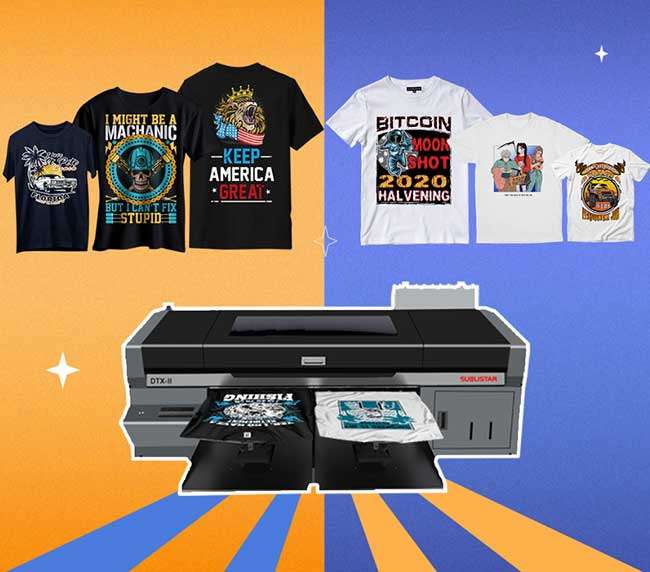
T-shirt printing DIY is growing in popularity due to the desire for personalized apparel, custom merchandise, and the growth of online t-shirt businesses. The industry’s profitability and high demand fuel its popularity, which is expected to continue growing. But, the best printer for you depends on your needs.
Print your own t-shirt prints!
The “best” t-shirt maker machine depends on needs like budget, volume, and desired printing method (DTG, DTF, or heat transfer vinyl). Budget aside, the most common reason to choose one over another is how the finished product looks. Each t-shirt print method looks different from the others. Direct to Garment (DTG) and Dye Sublimation look like part of the fabric, while Direct to Film (DTF) sits on top of the t-shirt but has brighter colors.
Common T-Shirt Printing Methods:
Screen printing
Screen Printing is a method of transferring ink through a stenciled, mesh screen onto a t-shirt, where each color in a design requires its own separate screen. This process creates durable, vibrant, and long-lasting prints, making it ideal for bulk orders from teams, schools, or businesses. The complexity of the design and the number of colors are the main factors affecting the cost, but it is very cost-effective for large quantities once the initial screen setup is complete.
How it works
- Create screens: For each color in the design, a stencil is created by burning a copy of that color onto a fine-mesh screen. The areas not blocked by the design allow ink to pass through. Set up the press: The prepared screens are loaded onto a screen printing press.
- Load the shirt: A t-shirt is placed onto the press, and the first screen is positioned over it.
- Print the ink: A layer of ink is pushed through the screen and onto the shirt using a squeegee.
- Cure the print: The ink is then cured to set it, making the design permanent.
- Repeat for each color: This process is repeated for each color in the design, with a separate screen and a new pass of ink for each.
When to use screen printing
- Large orders: Because the initial setup for each screen is time-consuming, screen printing is most cost-effective for large orders.
- Vibrant, durable designs: Screen printing produces bold, bright colors that can last for many washes.
- Bulk discounts: Screen printing is popular with groups like sports teams, schools, and businesses for large orders because of the
Top-Rated Screen Press Printers
- Riley Hopkins 250: A good step up from a beginner setup, this press is durable, mobile, and makes multi-color registration easier with its micro-registration features.
- Anatol and Hopkins: These brands are frequently recommended for high-quality manual presses and are known for durability, especially in a production environment.
Direct to Garment Printing
DTG, or Direct-to-Garment, is a printing method that uses a specialized inkjet printer to apply an image directly onto a T-shirt. This method is ideal for small-batch orders, complex designs, and photo-realistic prints on materials like cotton because it has a faster setup time compared to screen printing.
- How it Works: A digital printer applies ink directly onto the fabric, similar to a paper printer.
- Direct Ink Application: An industrial inkjet printer sprays a design’s ink directly onto the garment.
- Ink and Curing: Water-based pigment inks are used, and after printing, the ink is cured with a heat press to bind it to the fabric.
- Soft Feel: Because the ink soaks into the fibers, the final print has a softer, more breathable feel compared to methods that apply a film on top of the fabric.
Key Benefits
- Ideal for complex designs: It can produce high-resolution, full-color, and photo-realistic prints with intricate details.
- Good for small orders: The setup is quick and inexpensive, making it a cost-effective option for printing one-off items or small runs (under 24 pieces).
- Flexibility: A single machine can be quickly reconfigured for different designs, allowing for a faster turnaround time.
- Eco-friendly: The process can use less ink and water, and the water-based inks can be more environmentally friendly.
Limitations
- Best on natural fibers: While some DTG printers can handle blends, it works best on 100% cotton or other natural fibers.
- Limited design area: The print is restricted to the area the printer can access and cannot cover the entire garment like an all-over print.
- Slower for bulk orders: For large quantities, screen printing is typically faster than DTG.
Direct-to-Garment (DTG) and Hybrid Machines
RICOH Ri 1000X Direct-to-Garment Printer
The perfect DTG and DTF textile printer for print shops and T-shirt businesses is now even better with the new and improved Ri 1000X. Print on virtually any garment and unconventional area with Direct to Film (DTF) printing for greater color brightness and less ink consumption.
Sublistar – DTX-I – A3 DTG Printer, Direct to Garment T-shirt Printing
DTX-I – A3 DTG single station printer for cotton small batch printing, easy to operate, novice-friendly, small footprint, is perfect for DIY personalized clothing at home or small stores.
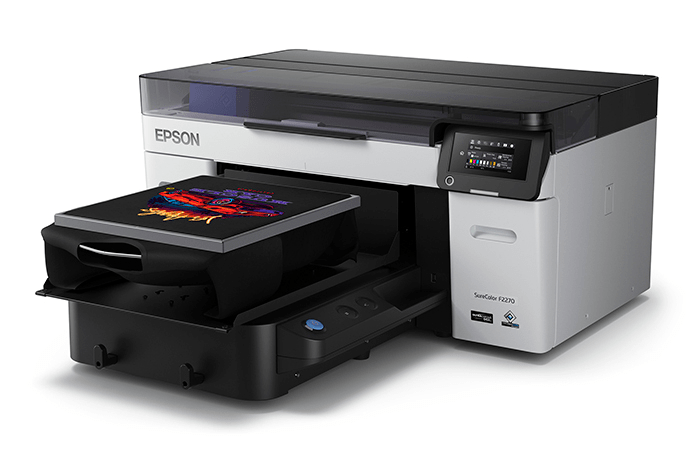
Epson F2270: A compact and quiet hybrid DTG/DTF printer, ideal for small to medium operations. It offers high-quality prints with a resolution of 1200 x 1200 dpi and uses efficient UltraChrome DG2 ink.
Brother GTXpro B: Another strong hybrid option that uses high-resolution printing at 1200 x 1200 dpi. It is designed for both DTG and DTF printing and is considered one of the more affordable hybrid machines.
Direct-to-Film (DTF) Systems
DTF printing is a relatively new technology in the t-shirt printing industry. It involves printing designs onto a special film using water-based inks, then applying a powdered adhesive to the film. The design is then transferred onto the garment using a heat press.
- Best for: Versatile designs on a wide range of fabrics.
- How it works: Designs are printed onto a film, which is then transferred to the garment with heat and pressure.
- Pros: Works on various materials, including blends, and produces vibrant colors.
- Cons: Can be less durable over time than screen printing.
Top DTF Printers
Procolored L1800: A popular, low-cost entry point with user-friendly software and good support, though it is slower.
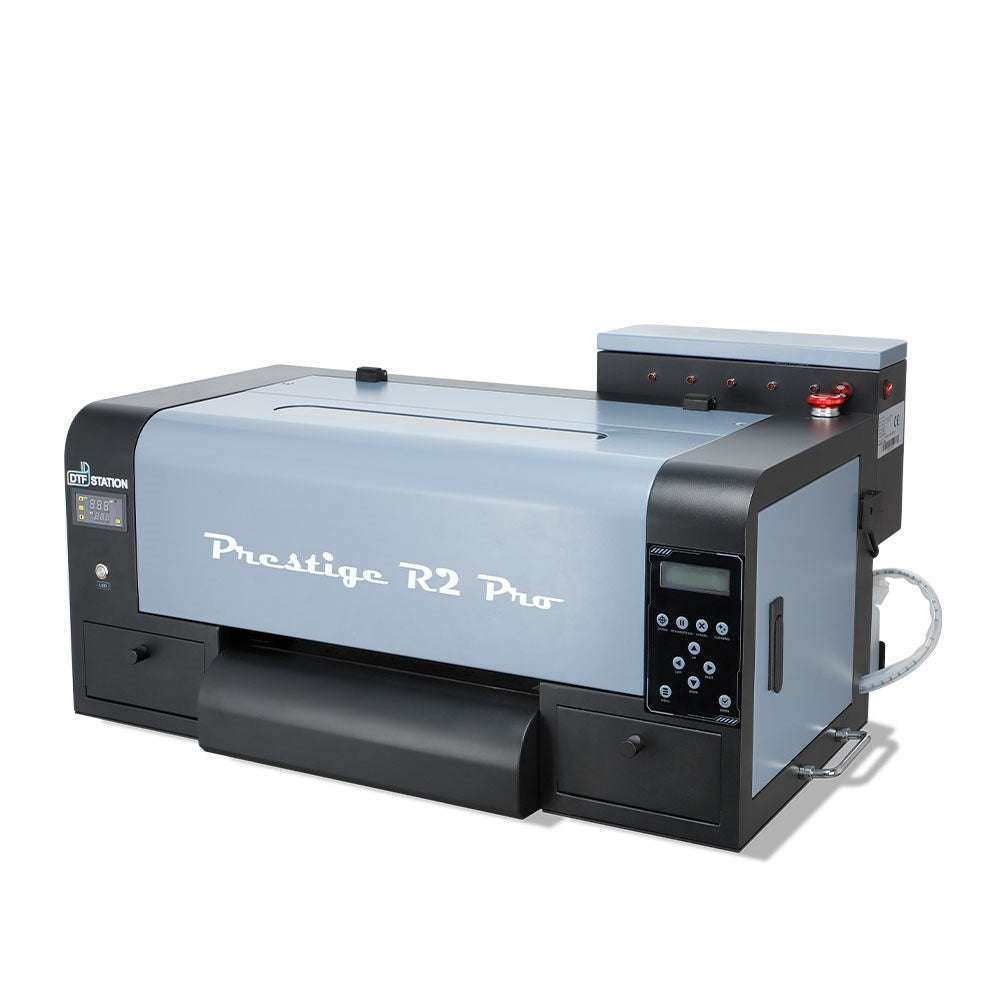
Prestige R2 Pro: A compact desktop printer with dual print heads, automated features, and a balance of speed and reliability for home-based businesses.
Epson SureColor F2270: A solid choice for businesses looking to scale up their DTF operations.
Epson SureColor F2100:
A durable option known for high-quality prints and capable of handling large production runs.
Dye sublimation
A dye-sublimation printer uses heat to transfer a solid dye into a gas, which then soaks into a specially coated surface. This process creates a high-quality, durable, and full-color image that is bonded directly to the material, rather than sitting on top of it. The technology is ideal for creating vibrant designs on items. All things considered, this is probably the best printing method for polyester shirts.
How it works
- Printing to transfer paper: The printer uses heat to apply dye from cellophane sheets (or ribbons) onto a special transfer paper. The colors are typically applied as cyan, magenta, and yellow, with a final clear or lamination layer added for protection.
- Heat and pressure transfer: The printed transfer paper is then placed onto the object, such as a t-shirt or a mug with a polyester coating.
- Sublimation: A heat press is used to apply high heat and pressure to the paper and the object. The heat turns the solid dye into a gas, which penetrates the material and bonds with it on a molecular level.
- Cooling: Once cooled, the image is permanent and integrated into the substrate.
Advantages
- High quality: Produces vibrant, sharp, and long-lasting images.
- Durability: The image is permanent and won’t crack, peel, or fade like traditional heat transfers.
- Versatility: Can be used for both textiles and hard-surfaced items with a polyester coating.
Limitations
- Material dependency: It only works effectively on polyester fabrics, polyester blends, or items with a polymer coating. It is not suitable for natural fibers like cotton.
- Color limitations: The dyes are semi-transparent, so it works best on white or light-colored materials.
For beginners on a budget
- Epson EcoTank ET-2800: The most affordable entry point for those just starting with sublimation, requiring you to add sublimation ink to the system.
For larger prints
- Epson ET-15000: A great option for those who need to print larger items like t-shirts, mugs, and stickers, with support for up to 13″ x 19″ prints.
For high-volume or business use
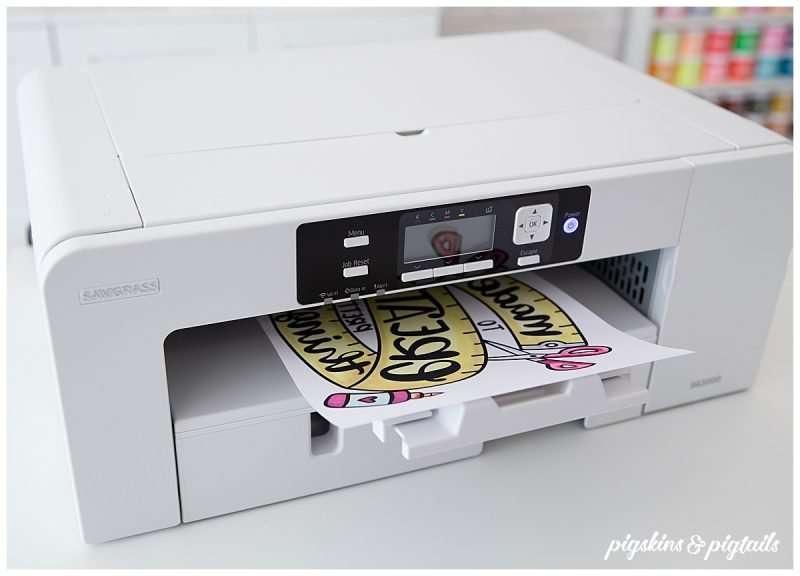
- Sawgrass SG1000: A professional, purpose-built printer that handles larger prints up to 11″ x 17″ for business applications.